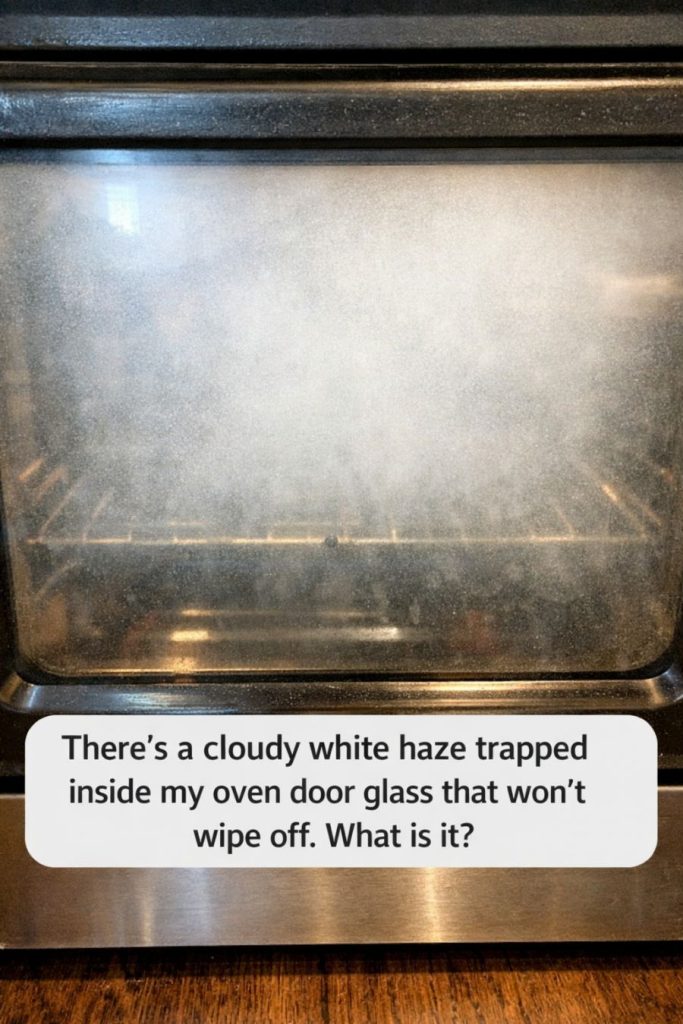
There’s a cloudy white haze trapped inside my oven door glass that won’t wipe off. What is it?

3. Other Common Culprits: Grease, Steam, and Cleaning Product Residue
While mineral deposits are a common cause of cloudy oven glass, other factors can contribute to the haze. Grease from cooking can splatter and settle on the glass, especially when roasting meats or baking dishes with high-fat content.
Steam from boiling or baking can also carry dissolved minerals or cooking residues, which can then deposit on the glass. Additionally, cleaning products, if not rinsed thoroughly, can leave a film or residue that contributes to the cloudiness. Each of these factors can individually or collectively lead to a less than clear view through your oven door.
4. Why the Haze Won’t Wipe Off From the Inside or Outside Surface
The haze is typically trapped between the panes of glass, making it inaccessible from either the inside or outside surfaces of the door. Most oven doors are designed with multiple layers of glass for insulation, creating a space that is difficult to reach without disassembling the door.
Because the mineral film is baked on, even if it were accessible, regular cleaning methods and solutions might not be effective. The film’s adherence to the glass is due to the high heat exposure, which essentially fuses the minerals to the glass surface.
5. How to Confirm It’s Mineral Film and Not Just Grease or Smoke Stains
To determine whether the haze is due to minerals or other substances, observe the nature of the stain. Mineral film often appears as a consistent, uniform white haze, whereas grease stains tend to be more irregular in shape and may appear yellowish or brown.
Smoke stains from frequent oven use or burning food can leave a darker, more sooty film. If the haze is uniform and white, it is more likely to be a mineral deposit. In contrast, if the haze has color or irregularities, it may be grease or smoke residue.
6. When Cloudy Glass Is Just Cosmetic — and When It Signals a Bigger Problem
In many cases, the cloudy glass is merely a cosmetic issue and does not affect the oven’s performance. It can be bothersome for those who frequently check their food without opening the door, but it does not impact cooking efficiency.
However, if the cloudiness is accompanied by other issues, such as uneven cooking or excessive heat loss, it might indicate a problem with the oven’s insulation or sealing. In such cases, it is advisable to consult a professional to ensure that there are no underlying issues affecting the appliance’s functionality.
7. Safe DIY Ways to Access the Space Between Oven Door Glass
Accessing the space between the glass panels requires some disassembly of the oven door, which should be done with caution to avoid damage. The first step is to consult your oven’s manual for specific instructions, as designs can vary significantly.
Typically, this involves removing screws located around the door frame and carefully separating the door panels. Oven doors are often heavy, so it may be helpful to have a second person assist. Once the panels are separated, you can clean the glass surfaces with a suitable cleaning solution and a non-abrasive cloth.
8. Cleaning Methods That Actually Work on Baked-On Mineral Film
To effectively clean baked-on mineral film, use a cleaning solution specifically designed to dissolve mineral deposits, such as a vinegar and water mixture. Apply the solution to the glass and let it sit for several minutes to break down the deposits.